
How to Start UPSC Preparation from Zero: A Complete Step-by-Step Guide for Beginners

Starting UPSC preparation from zero may feel overwhelming, especially when you have no idea which books to read, how to study current affairs, or how many hours to study daily. The good news is that you don’t need to be an expert to begin. You need a clear strategy, reliable study materials, consistent practice, and regular revision.
The Union Public Service Commission (UPSC) conducts the Civil Services Examination (CSE) to recruit candidates for prestigious services such as the Indian Administrative Service (IAS), Indian Police Service (IPS), and Indian Foreign Service (IFS).
This beginner-friendly guide explains how to start UPSC preparation from zero, including the syllabus, NCERT books, optional subjects, daily study timetables, and a practical 12-month preparation roadmap.
Step 1: Understand the UPSC Civil Services Examination
Before purchasing books or joining coaching classes, understand how the examination works.
The Civil Services Examination has three stages:
| Stage | Examination | Purpose |
|---|---|---|
| Stage 1 | Preliminary Examination | Screening candidates for Mains |
| Stage 2 | Main Examination | Testing detailed knowledge, writing and analysis |
| Stage 3 | Personality Test | Assessing suitability for public service |
UPSC Prelims
Prelims consists of two objective-type papers:
- General Studies Paper I: 200 marks, covering history, geography, polity, economy, environment, science and current affairs.
- General Studies Paper II (CSAT): 200 marks, covering comprehension, reasoning, numeracy and analytical abilities.
CSAT is qualifying, requiring a minimum of 33%. Both papers are compulsory, and incorrect answers attract negative marking.
UPSC Mains
Mains includes nine descriptive papers, of which seven count toward the written merit total of 1,750 marks. These cover Essay, four General Studies papers and two Optional Subject papers. The remaining two language papers are qualifying.
The Personality Test carries 275 marks, making the final merit total 2,025 marks.
Beginner tip: Start preparing for Prelims and Mains together because both share a substantial part of the syllabus.
Step 2: Download the Official UPSC Syllabus
One of the biggest mistakes beginners make is starting with books without reviewing the syllabus.
Visit the official website: https://upsc.gov.in
Download the latest Civil Services Examination notification and syllabus.
Divide the syllabus into major subjects:
- Indian History and Culture
- Indian and World Geography
- Indian Constitution and Polity
- Indian Economy
- Environment and Ecology
- Science and Technology
- Current Affairs
- Ethics and Essay Writing
- Optional Subject
- CSAT
Keep a printed or digital copy of the syllabus and refer to it regularly.
Practical exercise: Read five previous-year questions from any subject and identify which syllabus topics they test.
Step 3: Start with NCERT Books from Classes 6 to 12
NCERT textbooks help beginners build conceptual clarity before moving to advanced resources.
Recommended NCERT Reading Sequence
| Subject | Recommended NCERT level |
|---|---|
| History | Classes 6–12, selectively |
| Geography | Classes 6–12 |
| Polity | Classes 9–12 |
| Economics | Classes 9–12 |
| Science | Classes 6–10 |
| Society | Relevant Classes 11–12 textbooks |
You don’t need to memorize every page. Focus on understanding the concepts and connecting them with the UPSC syllabus.
How to Study NCERT Effectively
- Read one chapter carefully.
- Identify important concepts and terms.
- Make brief notes in your own words.
- Practice related previous-year questions.
- Revise the chapter before moving forward.
For example, while studying the Indian Constitution, understand fundamental rights, the structure of Parliament, the judiciary and federalism rather than simply memorizing definitions.
Download textbooks from the official NCERT website: https://ncert.nic.in
Step 4: Choose Limited Standard Books
After completing the relevant NCERT foundation, introduce standard reference books.
| Subject | Commonly used reference |
|---|---|
| Indian Polity | Indian Polity by M. Laxmikanth |
| Modern History | A Brief History of Modern India by Spectrum |
| Geography | G.C. Leong, along with NCERTs and an atlas |
| Economy | A standard economy textbook or structured preparation material |
| Environment | A standard UPSC environment resource |
| Art and Culture | Selective NCERT and CCRT resources |
Avoid purchasing several books for the same topic.
Golden rule: Revisit a reliable source multiple times instead of repeatedly switching to new materials.
Step 5: Develop a Daily Current Affairs Routine
Current affairs connect the static syllabus with contemporary national and international developments.
Allocate approximately 45–60 minutes daily.
Good sources include:
- The Hindu or The Indian Express
- Press Information Bureau (PIB)
- Government reports and official ministry websites
- Monthly current affairs compilations
Focus on government schemes, constitutional issues, international relations, economic developments, environmental concerns and major science and technology developments.
How to Make Current Affairs Notes
For every important issue, record:
Topic: Example — Climate Change
Background: What is the issue?
Current development: Why is it in the news?
Importance: How does it affect India?
UPSC relevance: Geography, environment, economy or governance.
Avoid copying entire newspaper articles. Your notes should be concise and useful for revision.
Step 6: Create a Realistic Daily Timetable
A consistent timetable is more effective than an ambitious schedule that you cannot maintain.
For Full-Time Aspirants
| Time | Activity |
|---|---|
| 7:00–8:00 AM | Current affairs |
| 8:30–10:30 AM | Main subject |
| 11:00 AM–12:30 PM | NCERT or standard book |
| 2:00–3:00 PM | Optional subject |
| 4:00–5:00 PM | MCQs or answer writing |
| 7:00–8:00 PM | Revision and CSAT |
For Working Professionals
| Duration | Activity |
|---|---|
| 45 minutes | Newspaper and current affairs |
| 90 minutes | Main subject |
| 45 minutes | MCQs, CSAT or answer writing |
| 30 minutes | Revision |
Working aspirants can begin with three focused hours on weekdays and use weekends for longer study sessions and mock tests.
Remember: Consistency matters more than counting the maximum possible study hours.
Step 7: Start Solving Previous-Year Questions
UPSC previous-year question papers (PYQs) are among the most valuable preparation resources.
They help you understand:
- The depth of questions
- Frequently examined themes
- Important syllabus areas
- Question patterns
- Common distractors in objective questions
Start with topic-wise PYQs, then move toward full-length papers.
Download official question papers from https://upsc.gov.in.
Don’t simply memorize the answers. Understand why an option is correct and why the others are incorrect.
Step 8: Begin Answer Writing for UPSC Mains
Mains requires clear, structured and analytical answers.
Beginners should start with one short answer several times a week, progressing to daily practice.
A good answer generally contains:
Introduction: Define or contextualize the topic.
Body: Explain the key dimensions with facts, arguments and examples.
Conclusion: Provide a balanced summary or constructive way forward.
For example, consider the question:
Discuss the importance of local self-government in strengthening Indian democracy.
You could begin by explaining decentralization, discuss the role of Panchayati Raj institutions, identify challenges, and conclude with measures to improve local governance.
Focus on addressing the precise demand of the question rather than writing everything you know about the topic.
Step 9: Select Your Optional Subject Carefully
The optional subject is an important component of UPSC Mains, accounting for 500 marks.
Choose your optional based on:
- Genuine interest
- Ability to understand the syllabus
- Availability of resources
- Your academic background
- Comfort with previous-year questions
- Time required to complete the syllabus
Popular choices include Political Science and International Relations, Sociology, Geography, History, Public Administration and Anthropology.
However, there is no universally best or guaranteed high-scoring optional.
Review the syllabus and past papers of two or three subjects before making your decision.
Step 10: Follow a 12-Month UPSC Preparation Roadmap
This illustrative roadmap assumes approximately one year of preparation. Adjust it around the official examination calendar.
| Month | Main preparation goal |
|---|---|
| 1 | Understand syllabus, PYQs and begin NCERT History |
| 2 | Complete foundational Geography and atlas work |
| 3 | Study Polity and Constitution |
| 4 | Study Economics and basic concepts |
| 5 | Environment, ecology and general science |
| 6 | Standard books and first major revision |
| 7 | Optional subject preparation and Mains writing |
| 8 | Continue optional, ethics and essay practice |
| 9 | Consolidate General Studies and current affairs |
| 10 | Intensive Prelims MCQs and CSAT practice |
| 11 | Full-length mocks, revision and error analysis |
| 12 | Examination-focused revision and weak-area improvement |
If your Prelims examination is approaching, prioritize Prelims-specific revision and full-length tests in the final months. Continue developing Mains skills earlier in the preparation cycle.
Step 11: Practice Mock Tests and Track Progress
Mock tests help identify knowledge gaps and develop exam temperament.
Start with chapter-wise tests and gradually attempt full-length papers.
After each test, review:
- Incorrect answers
- Questions answered through guesswork
- Concepts requiring revision
- Time management problems
- Repeated mistakes
Maintain an error notebook and revisit it weekly.
For CSAT, practice reading comprehension, reasoning and basic numeracy regularly—even if you are comfortable with mathematics.
Step 12: Use a Smart Revision Strategy
Forgetting previously studied concepts is normal. A structured revision system helps improve retention.
Try this schedule:
- First revision within 24 hours
- Second revision after one week
- Third revision after one month
- Additional revisions during mock-test preparation
Use short notes, flashcards, diagrams, maps and self-testing.
Revision should involve actively recalling information, not merely rereading pages.
Common Mistakes UPSC Beginners Should Avoid
1. Buying too many books: Start with NCERTs and limited standard sources.
2. Ignoring the official syllabus: Let the syllabus and PYQs determine your priorities.
3. Studying current affairs without connecting them to static subjects: Build links between developments and core concepts.
4. Avoiding CSAT: Its qualifying status does not mean you should neglect it.
5. Delaying revision: Make revision a weekly habit.
6. Depending entirely on coaching: Self-study and independent evaluation remain essential even when using coaching support.
7. Comparing your progress with other aspirants: Measure your improvement against your own plan.
Your First 30 Days of UPSC Preparation
If you’re unsure where to begin, use this simple plan.
Week 1: Orientation
Read the syllabus, understand the exam pattern, examine past papers and establish a daily study routine.
Week 2: History Foundation
Begin NCERT History, make chapter notes and solve introductory history questions.
Week 3: Geography Foundation
Study physical geography, practise maps and begin revising previous subjects.
Week 4: Polity Foundation
Study basic constitutional concepts, fundamental rights and institutions. Take a short combined assessment at the end of the week.
By the end of 30 days, you should have a clear understanding of the examination and a repeatable study routine.
Frequently Asked Questions
Can I clear UPSC without coaching?
Yes. Self-study is a viable preparation route. The key requirements are reliable resources, a systematic plan, regular practice and effective evaluation.
How many hours should beginners study?
Begin with a sustainable schedule. Working professionals may start with two to four focused hours daily, while full-time aspirants may plan longer sessions. Quality and consistency are more important than a fixed number.
Is one year enough for UPSC preparation?
One year can be sufficient for some aspirants, depending on their foundation, available study time, learning pace and consistency. It is not a guarantee of success.
Which subject should I study first?
History, Geography or Polity are practical starting points. Choose one foundational subject, complete it systematically and add related PYQs.
Is NCERT enough to clear UPSC?
NCERT textbooks provide a strong foundation but generally need to be supplemented with standard sources, current affairs, PYQs, mock tests and Mains answer-writing practice.
Can working professionals prepare for UPSC?
Yes. A realistic weekly schedule, focused study resources and consistent revision can make preparation manageable alongside employment.
Which attempt should beginners target?
Choose an examination cycle based on your eligibility, available preparation time and personal circumstances. Always confirm dates, age limits, attempt limits and category-specific eligibility in the applicable UPSC notification.
Related courses

Related articles
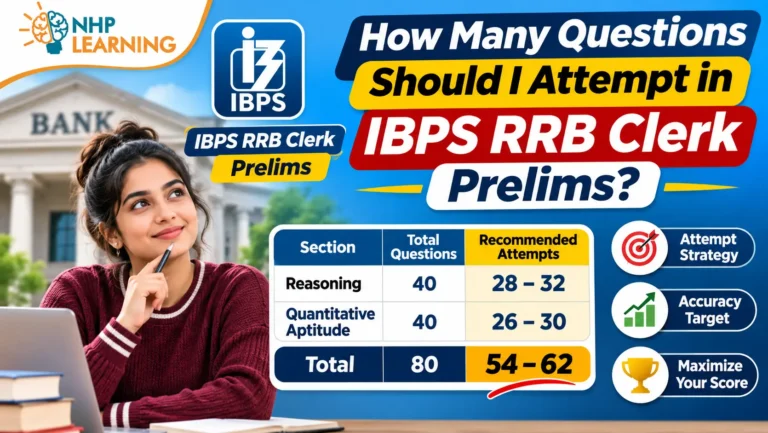
How Many Questions Should I Attempt in IBPS RRB Clerk Prelims?
You should aim to attempt 68 to 72 questions out of 80 in IBPS RRB Clerk prelims, with at least…
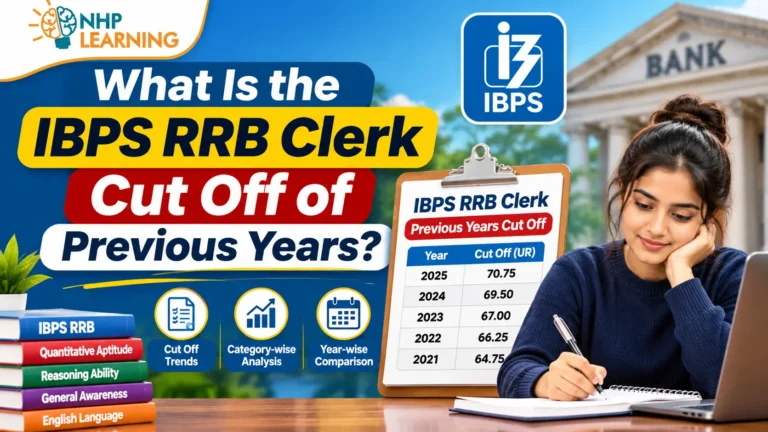
What Is the IBPS RRB Clerk Cut Off of Previous Years?
The IBPS RRB Clerk prelims cut off for General category was between about 58 and 78 marks out of 80…
How to Crack IBPS RRB PO Prelims in 20 Days
Yes, you can crack IBPS RRB PO prelims in 20 days if you already know the basics and spend 6…